
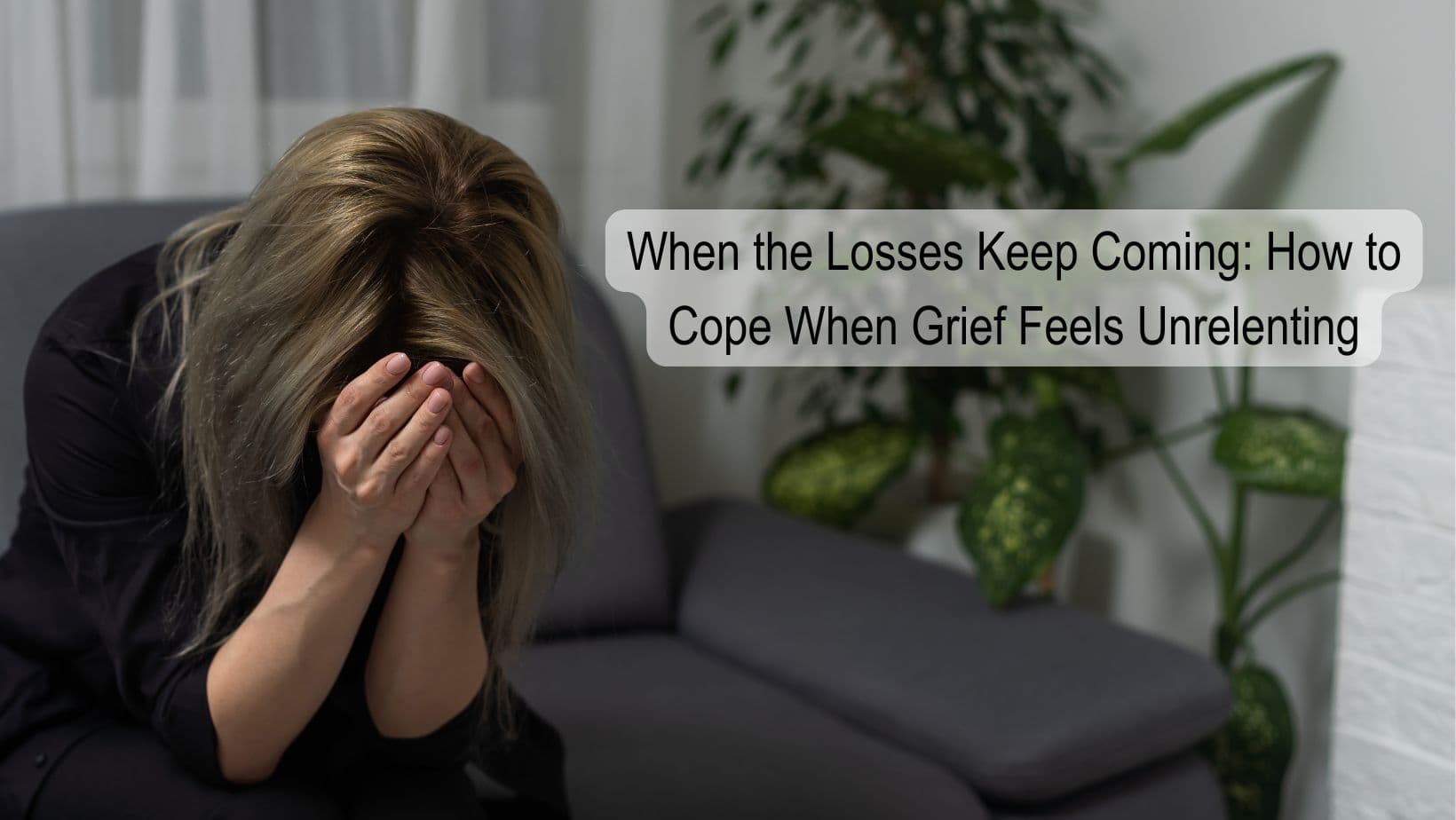
Have you ever felt like life just will not let you catch your breath?
The Impact of Loss
One loss is hard enough. But what happens when there is a series of them, one after another? A death, a breakup, a diagnosis, a job loss, a friend who drifts away. You barely start to recover from one before the next one hits. It is overwhelming, exhausting, and excruciating.
This kind of experience is more common than you might think, and the Grief Recovery Method will help. ### Why does grief feel so heavy?
Whether it is one loss or many, grief can bring a wave of emotions that feel impossible to manage. You might experience:
- Numbness or emotional shutdown as a form of protection
- Regret about things you wish you could have said or done differently.
- Confusion as your heart tries to process multiple layers of sorrow
- Overwhelmed by the sheer weight of it all
The human heart was unable to carry this pain without support. You are not broken. You are grieving. ### Grief is not just about death.
Many people only associate grief with death. However, grief is the normal and natural reaction to any loss. That includes:
- Divorce or the end of a relationship
- Loss of trust
- Pet loss
- Health issues
- Moving
- Financial changes
- Loss of safety or identity
So if you are hurting but no one died, that pain is still valid. Every loss counts. ### What helps: small and honest steps
You do not have to figure it all out at once. The GRM teaches that healing begins with honesty, a safe environment, and the right tools. That might look like:
- Admitting you need help..
- Telling the truth about how you feel. Not just saying, “I am fine” or “I am hanging in there.” Say what is real, even if it is messy or does not make sense.
- Getting support from someone trained to listen. Someone who will not try to fix, judge, or compare.
Grief does not follow a timeline. And it is never too much or too late to begin healing. ### There is still hope.
If you are feeling disoriented, anxious, depressed, or stuck, it does not mean you are failing. It means you are grieving. And the good news is that there is a method that can help you take the next step forward when you are ready.
You do not have to do this alone.
Interested in learning more about The Grief Recovery Method? Watch our free online Grief Course today.