








Have you ever looked at your baby and thought, Why do I feel so sad when I thought I would only feel joy?
Many new parents are surprised by the emotions after a baby is born. You may love your child deeply yet feel overwhelmed, anxious, or grief-stricken.
This can feel confusing and lonely when everyone assumes this is the happiest time of your life.
If you are experiencing postpartum grief, please know this first: you are not alone, and there is nothing wrong with you.
Why Grief Can Show Up After a Baby Is Born
Grief is the normal and natural emotional response to loss or change.
Most people think grief follows only a death. But grief can occur whenever life changes significantly. Few events alter your world as dramatically as becoming a parent.
Suddenly, everything shifts.
- Your sleep schedule disappears.
- Your life now revolves around another person.
- Your relationships may feel different.
- Your sense of identity can change.
- You might ache for the freedom you once took for granted.
- You might miss quiet time.
- You might miss feeling like yourself.
Even when a baby is deeply loved and wanted, it is normal to feel grief for the life that existed before.
These feelings do not make you selfish or ungrateful; they make you human.
The Baby Blues and Emotional Overwhelm
Many parents experience what is commonly called the baby blues during the first days or weeks after childbirth.
You may notice sudden crying, irritability, mood swings, or emotional fragility. Hormone shifts, exhaustion, and caring for a newborn can all contribute to these feelings.
For some parents, these emotions pass after a short time.
For others, feelings linger and intensify.
When Postpartum Grief Becomes Postpartum Depression
Sometimes grief after having a baby deepens into postpartum depression.
You might experience:
- persistent sadness
- exhaustion that does not improve with rest
- feelings of guilt or inadequacy
- difficulty bonding with your baby
- anxiety or panic
When you are in this space, it can feel like everyone else is enjoying parenthood while you are simply trying to make it through the day.
Many parents keep these feelings to themselves because they worry about being judged.
But postpartum depression and grief are more common than most realize.
Grief When Support Is Missing
Postpartum grief may appear when expected support is missing.
Maybe you imagined grandparents helping more than they do.
Maybe your partner is less involved than you hoped.
Maybe loved ones you wish could meet your baby are no longer here.
These moments create a deep sense of loss.
You may find yourself longing for someone to share the heavy responsibility, reassure you when doubt creeps in, or simply whisper, “You are doing a good job.”
Without support, grief can quietly grow.
Grief When a Baby Is Placed for Adoption
Parents who place a baby for adoption often hear logical explanations about why the decision makes sense.
People may say you’re giving your child a better future or making a loving sacrifice.
While those statements may be true, they do not erase the emotional pain.
Even when adoption is chosen thoughtfully and with love, grief may last for years or decades.
The emotional bond between parent and child does not simply disappear because circumstances change.
Acknowledging grief is an important step toward healing.
Why Postpartum Grief Can Feel So Isolating
One of the most wrenching aspects of postpartum grief is the silence that surrounds it, pressing down like a heavy blanket, making you feel unseen and unheard.
Pregnancy announcements are joyful.
Baby showers are celebratory.
Birth announcements are filled with excitement.
But the emotional complexity after birth is rarely discussed.
Because of that silence, many parents believe they are the only ones feeling this way.
They keep their feelings hidden.
They try to push the emotions away.
They tell themselves they should just be grateful.
But grief does not disappear simply because we try to ignore it.
You Are Not a Bad Parent for Feeling This Way
One of the most damaging myths surrounding postpartum emotions is the belief that struggling means you are a bad parent.
That is simply not true.
You can love your baby deeply and still feel grief about how dramatically life has changed.
You can feel joy glittering beside deep sadness, two truths beating in the same heart.
These emotions can coexist.
Your feelings aren’t a failure. They are your heart aching and yearning during this major life transition.
Healing From Postpartum Grief
Healing begins when your feelings are acknowledged instead of pushed aside.
The Grief Recovery Method helps people process unresolved emotional pain by taking specific actions to heal loss.
Instead of ignoring grief or trying to stay strong, this approach helps people process their emotions so they no longer feel overwhelmed.
Many parents find that processing grief brings more peace, clarity, and emotional freedom.
If You Are Experiencing Postpartum Grief
If this article resonates with you, please remember:
- You are not broken.
- You are not failing as a parent.
- You are not the only one who has felt this way.
Postpartum grief is real and valid. The mix of emotions after birth is more common than people admit.
You deserve support and understanding while you navigate this season of life.
Download the Free Guide
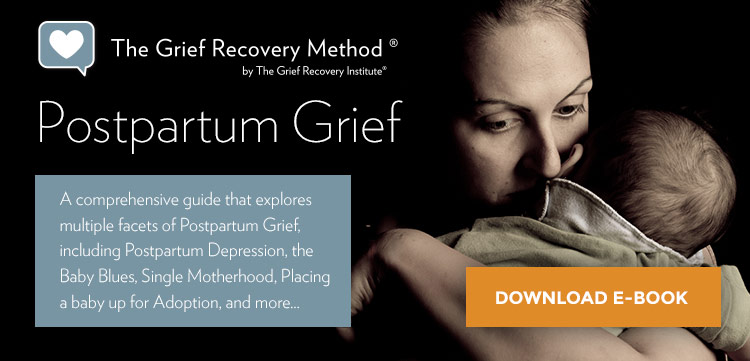
For a deeper understanding of postpartum grief and the emotional challenges of new parenthood, download a free guide that explains these experiences and offers support.
You can access the free ebook here:
Sometimes simply understanding what you are feeling can be the first step toward relief. This guide can help you recognize that your emotions are valid and that healing is possible.
You do not have to figure this out alone.


Comments
Karen Gilroy
This is such an important piece and I wish it existed when I started working in grief support. So many new mothers I have sat with over the years carry this silent weight of feeling like something is wrong with them because they are not experiencing the pure joy everyone told them they would feel. The section on grief when support is missing really resonated. I have worked with women who lost their own mothers before becoming mothers themselves, and the grief of not being able to call your mom to ask if your baby's temperature is normal or if they are eating enough is crushing. You are mourning your mother all over again through the lens of needing her most. Thank you for naming this so clearly. More families need to hear that grief and love can exist side by side in the same moment. - Karen Gilroy, grief counselor at myfarewelling.com
Add new comment